Understanding the Process of Pest Control Services in Warren County
When people call for pest control, they are usually reacting to one of two things. Either they have seen a pest with their own eyes, or they have started noticing the quiet evidence pests leave behind, scratching in a wall, droppings under a sink, tiny piles of wood dust near a baseboard, ant trails that appear every afternoon and vanish by bedtime. By the time that call happens, most homeowners are not looking for theory. They want to know what happens next, how long it takes, whether the treatment is safe, and whether the problem is actually going to stay gone.
That is where understanding the process matters. Good pest control is not just a spray and a bill. In Warren County, where seasonal swings, wooded lots, older homes, crawl spaces, barns, and suburban developments all create different pest pressures, the best results come from a methodical approach. A capable technician is equal parts investigator, risk manager, and problem solver. The treatment itself matters, but diagnosis matters first.
Why the process matters more than the product
One of the most common misconceptions about Pest Control Services Warren County homeowners hire is that the chemical choice is the whole game. It is not. Two companies can use similar products and get very different outcomes because the process surrounding the Pest Control Services Warren County treatment is what makes it effective.
Take carpenter ants, for example. If a technician treats only the ants visible on a kitchen counter, the colony may continue undisturbed in a damp wall void or behind a window frame. The customer feels relief for a few days, then sees ants again and assumes the treatment failed. In reality, the wrong target was treated. The visible ants were only the symptom.
The same holds true for mice. Setting traps in the basement without identifying the entry points on the exterior often creates a cycle of temporary improvement followed by fresh activity. The problem is not always the absence of treatment. It is often incomplete inspection, weak exclusion work, or unrealistic expectations about the timeline.
That is why reputable companies begin with observation and questions. Where were the pests seen, at what time of day, in what numbers, and for how long? Has there been recent moisture damage, renovation work, mulch added to foundation beds, firewood stacked near the home, or pet food left accessible overnight? These details shape the plan.
What typically triggers a service call in Warren County
Warren County presents a broad mix of pest conditions. Rural properties may deal with rodents, stinging insects, and occasional wildlife pressure around outbuildings. Newer subdivisions often see odorous house ants, pavement ants, spiders, and seasonal wasp nesting around eaves and play structures. Older homes, especially those with stone foundations, crawl spaces, or aging weather seals, tend to be vulnerable to mice, termites, and moisture-related insect activity.
Weather plays a large role. A wet spring often increases ant activity and can set the stage for mosquito pressure later in the season. Hot, dry stretches sometimes push pests inward in search of moisture. Early cold snaps tend to trigger rodent movement into garages, utility penetrations, and wall voids. Many homeowners assume pests “came out of nowhere,” but in practice there is usually a seasonal pattern behind the sudden appearance.
In one very typical case, a homeowner might notice cluster flies Pest Control Services Warren County around second-floor windows in late fall. Another sees yellow jackets cutting in and out of a soffit on a warm September afternoon. A restaurant manager may call after spotting German cockroaches near a dish area, which is a very different level of urgency than a homeowner seeing a few boxelder bugs on siding. Good service starts by sorting nuisance issues from structural risks and from true sanitation or health concerns.
The first visit, inspection before action
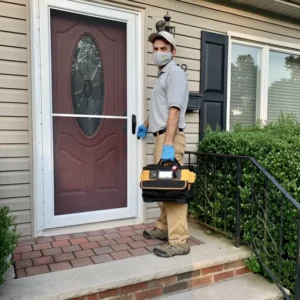
A proper first visit should feel deliberate. If a technician arrives and begins treating without inspecting the property, that is usually a red flag. Inspection is where the useful work starts.
Inside, the technician will often look at the areas where pests were seen, but also at the places pests use when people are not watching. Under sinks, behind appliances, around sump pumps, in utility rooms, inside garage corners, around attic hatches, and along sill plates are common checkpoints. In basements and crawl spaces, signs such as droppings, rub marks, gnawing, shed insect parts, frass, damaged insulation, moisture staining, and gaps around pipes can tell a clearer story than the customer’s sighting alone.
Outside, the inspection often reveals why the infestation took hold. Overgrown shrubs touching siding, mulch piled too high against the foundation, standing water in clogged gutters, deteriorated door sweeps, separated trim, unsealed cable entry points, and stacked materials against the home all create access or harborage. Sometimes a customer is certain the issue is inside the kitchen when the real starting point is a gap around an air conditioning line set ten feet away.
A strong inspection also helps set expectations. If a home has a heavy mouse infestation with multiple exterior openings and dense basement storage, no honest professional should promise same-day resolution. On the other hand, a localized paper wasp issue on one porch light may be solved quickly and cleanly.
What the technician is trying to identify
The point of inspection is not just to confirm that pests exist. It is to answer several practical questions at once.
- What species is involved, or what is the closest defensible identification?
- Where are the pests living, breeding, or entering?
- How severe is the activity right now?
- What conditions are allowing it to continue?
- Which mix of treatment, sanitation, and exclusion offers the best chance of control?
Species matters more than many customers realize. “Ants” can mean a minor nuisance or a sign of structural moisture issues. “Bees” might refer to harmless pollinators in the yard, aggressive yellow jackets in a wall void, or carpenter bees drilling exposed wood. “Bugs in the pantry” could mean several different stored-product pests, each with its own source. Misidentification wastes time and money.
A seasoned technician often sees patterns fast. Fine, pepper-like droppings in a cabinet corner suggest one story. Coarser droppings in a garage with gnaw marks suggest another. Mud tubes on a foundation call for a different response than sawdust beneath a window stool. Experience does not replace inspection, but it sharpens it.
Building a treatment plan that fits the property
After the inspection, a technician should explain the problem in plain language. This is where homeowners can tell whether they are dealing with a professional or a script reader. The explanation does not need to be dramatic. It needs to be specific.
For example, a good plan might sound like this: the ant activity appears to be coming from moisture-compromised trim near the back sliding door; the interior foragers are secondary, so treatment will focus on the exterior trail, the likely nesting area, and recommendations for repairing the water source. Or this: rodent entry is most likely occurring at two utility penetrations on the north foundation wall and a garage corner gap under the siding, so trapping inside will be paired with exclusion work outside.
The best plans balance immediate control with long-term prevention. Immediate control reduces the active pressure. Long-term prevention changes the conditions that let the pests return. If only the first half is done, the same customer often ends up calling again in a month or two.
Not every situation calls for the same treatment style. Some can be managed with targeted applications in cracks, crevices, voids, and entry zones. Others call for baiting systems, insect growth regulators, mechanical traps, monitoring devices, dusts in enclosed spaces, or exterior barrier work. In sensitive environments such as homes with infants, pets, aquariums, or immune-compromised residents, communication around product placement and reentry instructions becomes even more important.
What happens during treatment
The actual service visit varies by pest, but the rhythm is usually similar. The technician confirms findings, reviews the plan, addresses any immediate concerns, performs the treatment, and then gives follow-up instructions.
Here is what a typical process looks like during an initial service:
- Confirm the target pest and review where activity has been seen.
- Apply treatment in the specific areas that match the pest’s behavior.
- Place monitors, traps, or bait stations if the issue requires ongoing tracking.
- Seal or recommend sealing of obvious entry points when appropriate.
- Explain what changes the customer should expect over the next few days or weeks.
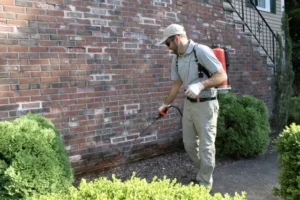
For ants, treatment may focus on entry points, exterior trails, and the nesting zone rather than broad interior spraying. For roaches, a technician may use a much more precise combination of gel baits, dust in voids, sticky monitors, and sanitation guidance. For mice, trapping strategy matters. Trap placement along runways, behind stored materials, and near active edges typically works better than placing traps in open space where mice are less likely to travel.
Customers often expect every pest to die instantly. That is not how all products work, and in many cases instant knockdown is not even the goal. Some modern materials are designed to transfer within a colony or remain effective over time in hidden pathways. A surge in visible activity can even happen briefly after treatment as pests are displaced from nesting areas. That does not automatically mean the service failed. It may mean the material is doing exactly what it should.
The role of safety and communication
Good pest control is as much about restraint as application. More product does not automatically mean better control. Overapplication can be sloppy, unnecessary, and in some cases counterproductive. Professionals are trained to apply products according to label directions and site conditions, with attention to placement, ventilation, exposure pathways, and who lives in the home.
Customers should expect clear communication about where products were used, whether they need to stay out of treated areas for a period, and what to do with pet bowls, toys, bedding, or food-preparation surfaces. In many standard services, disruption is minimal. In other cases, such as intensive bed bug work or large-scale cockroach cleanouts, preparation and post-treatment instructions can be much more involved.
A practical technician also knows when not to treat. If a homeowner points to every spider web around exterior lights in midsummer, the right answer may include habitat reduction and lighting adjustments, not just a routine spray. If the issue is fruit flies from a drain slime problem, sanitation and mechanical cleaning may matter more than pesticide use. Judgment is part of the service.
Follow-up is where lasting control is often won
Initial treatment gets most of the attention, but follow-up is where many pest problems are truly controlled. Certain infestations almost never resolve in one visit. German cockroaches, heavy rodent problems, stored-product pests, and recurring ant colonies often need monitoring, adjustment, and sometimes multiple service intervals.
This is especially true in homes where the contributing conditions cannot be fixed immediately. A landlord may need time to repair water damage. A homeowner may need to replace a damaged sweep or rotted sill. A restaurant may need operational changes before sanitation improves. During that gap, the pest control strategy has to bridge the problem without pretending the environment does not matter.
A solid follow-up visit usually checks trap catches, evaluates whether activity patterns changed, looks for fresh evidence, and updates the plan based on results. If there are still mice, the question is not merely whether the traps were set. It is whether the original assumptions about travel routes and entry points were correct. If ant activity shifted from the kitchen to an upstairs bath, that can indicate a moisture source that was not obvious during the first inspection.
One of the biggest differences between average and excellent Pest Control Services Warren County residents can hire is this willingness to reassess rather than repeat the same service mechanically.
What homeowners can do before and after the appointment
The customer is not expected to become a pest expert, but a few basic steps can make treatment more effective and help the technician work faster.
- Clear access to problem areas such as under sinks, around utility walls, and behind stored items when possible.
- Store food in sealed containers and clean up grease, crumbs, and pet food before the visit.
- Report every area of activity, even if it seems minor or unrelated.
- Follow reentry and cleanup instructions exactly as given.
- Repair leaks, screens, sweeps, and other structural issues as soon as practical.
These steps matter because pests exploit the gaps between treatment and housekeeping, between trap placement and structural repair. A beautifully executed roach treatment can be undercut by persistent moisture under a dishwasher. A strong mouse program can stall if the basement remains cluttered wall to wall with cardboard and fabric.
At the same time, homeowners should not feel blamed for every infestation. Plenty of clean, well-kept homes get pests. Ants come in during wet weather. Wasps choose soffits because they are sheltered. Mice enter when temperatures drop and a quarter-inch gap offers a warm route inward. Good companies know the difference between contributory conditions and careless finger-pointing.
How timing affects results
Timing can shape both cost and outcome. Treating a wasp nest when it is small is easier than dealing with a mature colony buried inside a wall void. Addressing early termite evidence is simpler than waiting until swarmers appear repeatedly indoors. Handling mice at the first sign of droppings is far less involved than tackling a full cold-weather infestation after they have spread through insulation, storage, and wall spaces.
Seasonal service can also make sense in Warren County because many pest pressures are predictable. Exterior ant activity tends to rise in warmer months. Stinging insects build gradually through the season. Rodent pressure often increases as outside temperatures fall. Preventive service is not necessary for every property, but for homes with recurring patterns, especially wooded lots, properties near water, or structures with a history of access issues, it can reduce surprises.
That said, not every recurring sighting calls for a full program. A handful of occasional invaders in a century-old home near open fields may be normal background pressure rather than a sign of a major infestation. This is where honest guidance matters. The goal is to solve the right problem at the right scale.
Common edge cases that change the approach
Some pest jobs look simple at first and turn complicated quickly. Vacant homes, for instance, often develop pest issues that behave differently than those in occupied houses. No daily movement, no routine cleaning, and no lights or noise can let rodents settle in more confidently. Conversely, some insect issues diminish in vacant homes because food and moisture sources are reduced.
Multi-unit housing adds another layer. A tenant may keep a unit spotless and still struggle if neighboring units have untreated activity. In those cases, isolated treatment can only do so much. Coordination matters. So does documentation.
Properties with children, pets, birds, reptiles, or fish tanks also require more planning. Aquariums, in particular, are worth mentioning because aerosolized or misapplied products near them can create avoidable risk. Experienced technicians ask about these things upfront because the details affect how and where they work.
Then there are the jobs where the pest is not actually the core issue. Carpenter ants may be the visible symptom of chronic moisture intrusion. Drain flies often point to neglected organic buildup in drains or floor sinks. Termite conditions frequently overlap with drainage flaws, wood-to-soil contact, or hidden leaks. In those cases, pest control is part of the remedy, not the whole remedy.
Choosing a company with the right process
Customers often shop by price first, which is understandable, but the cheapest service can become the most expensive if it drags on without solving the problem. A better way to compare providers is to ask how they inspect, how they identify the target pest, how they decide on treatment, what follow-up looks like, and what role exclusion or environmental correction will play.
A reliable company should be comfortable explaining why a plan fits the pest and the property. They should not need to hide behind vague promises. If they recommend recurring service, they should be able to explain the frequency in practical terms, not just as a sales package.
Documentation also matters. Service summaries, treatment notes, and clear instructions help customers understand what was done and what to watch for next. That is especially important when multiple visits are involved or when a real estate transaction, tenant issue, or structural concern is part of the picture.
What successful pest control really looks like
The best outcome is not always dramatic. Sometimes it is very quiet. No more scratching at 2 a.m. No fresh ant trail by the coffee maker. No new frass under the trim. No wasps working the same corner every afternoon. A successful service often feels uneventful after the fact because the technician found the leverage point and addressed it before the problem spread further.
That is the real process behind effective Pest Control Services Warren County property owners depend on. It starts with inspection, not assumptions. It relies on accurate identification, targeted treatment, practical prevention, and follow-up when the pest biology demands it. It respects safety, uses judgment, and avoids the temptation to treat every issue as if it were identical.
When that process is followed well, pest control becomes less about reacting to the next surprise and more about restoring control over the property itself. For homeowners, landlords, and business operators alike, that is the difference between temporary relief and a solution that holds.
Affordable Pest Solutions LLC
Budd Lake, NJ 07828 (service-area business)
Serving Warren, Morris and Sussex Counties, New Jersey
Phone: +1 973-229-9547
FAQ About Pest Control Services Warren County
How much does pest control cost in NJ?
The cost depends on the pest, the size of the property, the extent of activity and whether follow-up visits are needed. Ask for an inspection and a written estimate that explains the treatment scope and any ongoing service charges. Affordable Pest Solutions offers free estimates for properties in its service area.
What are the most common household bugs in New Jersey?
Ants, cockroaches, stink bugs and spiders are among the pests that residents may encounter in New Jersey homes. Activity varies by season, moisture conditions and available entry points. Correct identification helps determine whether exclusion, sanitation, monitoring or professional treatment is appropriate.
What kind of bugs infest homes?
Ants, cockroaches and termites can establish persistent activity in or around homes. The signs and appropriate response differ by pest: trails, droppings, shed wings or damaged wood may warrant closer inspection. A pest professional can identify the cause and recommend a plan suited to the property.